
Visa used Mythos to hunt for bugs in its own payment network, then open-sourced the harness that made it possible

Visa aimed Anthropic's Claude Mythos at the infrastructure behind billions of daily transactions, a network that spans more than 200 countries and territories, moves money in roughly 160 currencies, and connects nearly 5 billion payment credentials to more than 175 million merchant locations.
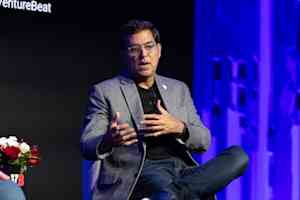
The model stitched minor weaknesses deep in the stack into working exploit chains that would traditionally have surfaced only late in penetration testing. Rajat Taneja, Visa's president of technology, walked the VB Transform 2026 audience through what came next, including why Visa released the harness that governed the entire hunt as open source and why the company abandoned traditional remediation metrics for a measurement its team invented.

Taneja has run technology strategy, product engineering, and global infrastructure at Visa since 2019, after joining the company in 2013 from Electronic Arts, where he served as CTO following 15 years at Microsoft. He co-authored, with Visa chief information security officer Subra Kumaraswamy, the June 10 blog post announcing the release of the Visa Vulnerability Agentic Harness on GitHub as a reference implementation that any security team can inspect, adapt, and extend. Visa also published a technical white paper detailing the architecture, lessons learned, and 12 non-negotiable architectural practices for critical infrastructure.
Trust built on pessimism and paranoia
Taneja led with the arithmetic that makes Visa a target worth defending obsessively. Trust at the scale of global payments gets engineered through what he called pessimism and paranoia, by assuming failure and designing around it before failure arrives. The network has been hardened over many years through zero-trust architecture, layered defenses, and highly automated security operations built for the scale and reliability global payments demand.
So when Anthropic invited the organizations behind critical software to test Mythos under Project Glasswing, Visa said yes. Glasswing participants collectively identified more than 10,000 high- or critical-severity vulnerabilities in the first month of testing across software underpinning critical systems industry-wide, according to Anthropic. Anthropic's own conclusion placed the bottleneck after discovery, in verification, disclosure, and patching speed. Visa joined to test decades of hardening at AI speed and learn where advanced models could push its defenses further.
What Mythos showed at Visa
Inside Visa's environment, Mythos demonstrated system-wide, context-aware analysis, surfacing vulnerabilities buried deep in the stack and flagging issues that grow more serious when chained together, with findings clean enough that engineering teams could act on them without wading through noise. Some findings carried critical severity ratings, and Visa credits its zero-trust controls, network segmentation, and layered safeguards with breaking the chain before any external actor could have acted.
That confirmation mattered, Taneja said, but the epiphany that followed mattered more. "In a world of agentic attacks, defense also has to be agentic," he said. Even at a company that has invested decades in defense-in-depth, the model revealed assumptions the team had been operating under that needed rethinking. Traditional SAST tools keep their place as a first pass against known vulnerability patterns, Visa's white paper notes, but pattern matching alone cannot follow an adversary who reasons through logic, data flow, and the exploit chains that live between the signatures.
A harness, not a scanner
Visa's response was not another monolithic scanner. The team built the Visa Vulnerability Agentic Harness, now in its fifth generation, as a governed pipeline that directs frontier AI models through structured security tasks while enforcing deterministic controls, policy gates, and human oversight at every stage. Taneja walked through the design philosophy. The harness operates across four phases and eleven stages, from code ingestion and threat modeling through deep-dive verification, exploit chain synthesis, and finally remediation and fix validation.
Three design choices drive finding quality, per the project's own documentation. Threat modeling runs before analysis to focus on the attack surface rather than scanning everything blindly, multi-agent deterministic voting requires convergence across independent reasoning chains before a finding advances, and structured triage artifacts compress the lifecycle from discovery to a result developers can actually ship. The payoff is a pipeline that runs hot by default. A plain scan in the shipped profile runs all eleven stages and edits source files in the target repository in fix mode, applying candidate patches unless the operator stops it at detection.

The harness is multi-model by design. An LLM abstraction layer lets Visa swap or combine providers without changing the control plane, and the open-source version works with Anthropic Claude, OpenAI-compatible models, or a mix. The repo's documentation is candid about the exception. Applying a fix requires the file-editing tools that only the Anthropic backends expose, so the remediation and validation stages currently require Anthropic models for full functionality, and an OpenAI-compatible model in those roles is limited to report-only output. VentureBeat's Q2 2026 Pulse research, presented earlier at the conference, reinforces why that provider flexibility matters. Among the enterprises surveyed, 82% rely on provider-native controls as their primary security layer, and 59% plan to adopt or switch agent security tooling within the year. The controls enterprises adopted last year are already becoming the controls they plan to replace.
Mean Time to Adapt replaces legacy metrics
Finding vulnerabilities is no longer the hard part, Taneja argued. The real challenge is how quickly a team can confirm an issue is truly exploitable, fix it, and prove the attack path is closed rather than just showing a patch was applied. Visa calls this Mean Time to Adapt, and the white paper tracks it along three dimensions. Inventory freshness measures how current and complete the organization's view is of code, configuration, and runtime deployment. Exploitable paths per release counts how many end-to-end attack chains remain possible after each release, not just how many findings were closed. Validation cycle time tracks how long it takes to produce repeatable, evidence-backed proof that a fix works and stays working in production.
That distinction matters because legacy measures such as mean time to detect and raw CVE closure counts can look better on paper while actual exposure keeps growing underneath them. An organization can close hundreds of findings a month and still leave viable exploit chains open if nobody tested whether the patches actually break the attack. MTTA forces teams to measure the outcome that matters, and the white paper leans on CISA Known Exploited Vulnerabilities data to make the prioritization case, noting that fewer than 1% of CVEs are ever actively exploited. Visa's SSDLC policy now assumes every exploitable path will be exercised in production and requires it to be remediated before code is promoted.
Supply chain risk accelerates under AI
The conversation moved past Visa's own perimeter when Taneja turned to suppliers. A well-defended enterprise stays exposed through weak vendors and weak open-source components, the white paper warns, so Visa is making AI-specific security posture a non-negotiable dimension of supplier due diligence, with expectations for continuous vulnerability validation, living software bills of materials, and MTTA baselines across its technology stack.
Visa has also joined Project Lightwell, the $5 billion IBM and Red Hat initiative to harden widely used open-source components through AI-driven validation and coordinated patching, alongside financial institutions including Bank of America, JPMorganChase, Goldman Sachs, and Mastercard. The commitment extends the same logic upstream, because the MTTA clock does not pause at any single company's perimeter.
When agents start buying things
Securing agentic commerce is Visa's next problem. Taneja described a future where AI agents transact on behalf of consumers and enterprises, and said Visa is building the trust framework, identity layer, and agent readiness scoring that merchants will need before agents can safely complete transactions. Behind that work sits the Visa Payment Threats Lab, a simulation environment where real fraud scenarios get replayed against the authorization rules, thresholds, and configurations Visa actually runs, to surface AI-enabled failure modes as targeted hardening recommendations.
The identity challenge is not theoretical. VentureBeat's Pulse research found that 69% of enterprises already run credential sharing somewhere in their agent deployments, and companies with shared credentials report security incidents or near-misses at a 63.5% rate, against 40.9% where every agent has its own scoped identity. Visa's white paper addresses that gap directly, listing "AI agents are identities" among its 12 non-negotiable practices and requiring scoped permissions, least privilege enforcement, full audit trails, and inclusion in IAM governance for every agent that calls an API, reads data, or modifies a system.
Three priorities for defenders
Visa is organizing its defensive strategy around three priorities, Taneja said. Shift security left until exploitable flaws are designed out before they reach production, and replace high-risk, under-supported components before they turn into material exposure. The third is the heaviest lift at Visa's scale, refactoring defenses to run autonomously under human governance so detection, validation, and response keep pace as threat volume grows and the models behind attacks improve.
None of it requires a payment network's budget to start. The harness sits on GitHub with 595 stars and 97 forks as of July 20, MTTA needs a dashboard rather than a procurement cycle, and the white paper's 12 non-negotiable practices map onto architecture reviews security teams already run. Visa's own conclusion reads like a deadline. The opening to get ahead of machine-speed attackers is still there, the paper argues, and it will not stay open.


